

Starch-Based Degradable Bioplastics Market Set For Rapid Expansion With 14.7% CAGR Through 2030
Starch-Based Degradable Bioplastics Market

The Business Research Company
The Business Research Company's Starch-Based Degradable Bioplastics Market Report 2026 – Market Size, Trends, And Global Forecast 2026-2035
LONDON, GREATER LONDON, UNITED KINGDOM, September 23, 2026 /EINPresswire.com/ -- "The starch-based degradable bioplastics market is emerging as a promising sector within the broader push towards sustainable materials. With growing environmental concerns and regulatory support, this market is attracting significant attention and investment. Let’s explore its current scale, key growth factors, regional dynamics, and prevailing trends shaping its future.
Starch-Based Degradable Bioplastics Market Size and Growth Outlook
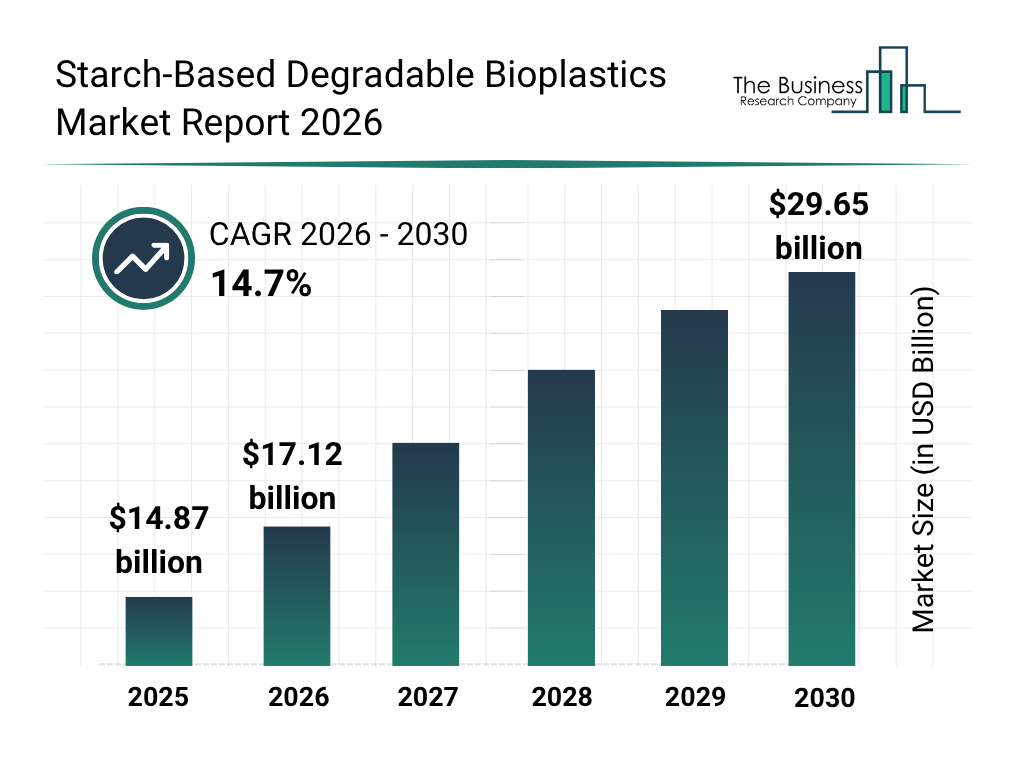
The market for starch-based degradable bioplastics has witnessed swift expansion in recent years. It is projected to increase from $14.87 billion in 2025 to $17.12 billion in 2026, growing at a compound annual growth rate (CAGR) of 15.1%. This upward trajectory during the historical period is largely driven by heightened awareness regarding plastic pollution, widespread use of conventional petroleum plastics, early-stage research into biodegradable alternatives, growth in packaging and consumer goods sectors, and government-led waste management initiatives.
Download a free sample of the starch-based degradable bioplastics market report:
https://www.thebusinessresearchcompany.com/sample_request?id=64515225&type=smp&name=Starch-Based%20Degradable%20Bioplastics%20Market%20Report%202026&utm_source=EINPresswire&utm_medium=paid&utm_campaign=Sep_PR
Looking ahead, the starch-based degradable bioplastics market is expected to continue its robust growth, reaching an estimated $29.66 billion by 2030 with a CAGR of 14.7%. The forecast period growth is influenced by stricter regulations banning single-use plastics, rising demand for compostable packaging, expansion of circular economy frameworks, increased investment in bio-based material innovation, and stronger consumer preference for eco-friendly products. Key trends forecasted include the development of high-performance starch blend bioplastics with enhanced mechanical properties, compostable packaging solutions especially for the food and beverage sector, utilization of agricultural residues for starch bioplastic production, water-soluble starch films aimed at reducing single-use packaging, and modified starch bioplastics offering improved thermal and moisture resistance.
Understanding Starch-Based Degradable Bioplastics
Starch-based degradable bioplastics are biodegradable polymers primarily derived from natural starch sources such as corn, potato, wheat, or cassava. These materials are engineered to partially or fully replace conventional petroleum-based plastics by offering similar qualities like flexibility, moldability, and durability. At the same time, they are designed to break down through microbial activity under specific environmental conditions, decomposing into natural components such as water, carbon dioxide, and biomass. This approach helps reduce plastic pollution and supports circular use of materials.
View the full starch-based degradable bioplastics market report:
https://www.thebusinessresearchcompany.com/report/starch-based-degradable-bioplastics-market-report?utm_source=EINPresswire&utm_medium=paid&utm_campaign=Sep_PR
Increasing Demand for Sustainable Packaging Boosts Market Growth
A key factor driving the expansion of the starch-based degradable bioplastics market is the rising global demand for sustainable packaging solutions. These solutions aim to minimize environmental impact by lowering plastic waste and enhancing biodegradability or recyclability. Heightened environmental concerns alongside stricter governmental regulations targeting plastic pollution have accelerated this demand. Starch-based bioplastics provide renewable, plant-based alternatives that naturally decompose after use, reducing reliance on traditional plastics and helping curb long-term environmental waste buildup.
Consumer willingness to pay more for sustainable packaging also supports this growth. For example, in April 2023, the 2023 Buying Green Report by Trivium Packaging—a sustainable packaging company based in the Netherlands—showed that 82% of consumers were willing to spend extra for environmentally friendly packaging, marking a 4% increase from 2022. This growing consumer preference is a strong catalyst for the starch-based degradable bioplastics market.
Regional Trends in the Starch-Based Degradable Bioplastics Market
In 2025, North America held the largest share of the global starch-based degradable bioplastics market. However, the Asia-Pacific region is anticipated to experience the fastest growth during the forecast period. The market analysis includes comprehensive coverage of key regions such as Asia-Pacific, South East Asia, Western Europe, Eastern Europe, North America, South America, the Middle East, and Africa, reflecting a broad global perspective on market expansion and regional developments.
Expanded capabilities in our 2026 market reports:
• Market attractiveness scoring and analysis
• Total addressable market (TAM) analysis
• Company scoring matrix graphics and tables
• Excel-based forecasting dashboards
• Market hotspots infographics
• Key technologies and future trend analysis
• Updated graphics and tables
Speak With Our Expert:
Saumya Sahay
Americas +1 310-496-7795
Asia +44 7882 955267 & +91 8897263534
Europe +44 7882 955267
Email: marketing@tbrc.info
The Business Research Company - www.thebusinessresearchcompany.com
Follow Us On:
• LinkedIn: https://in.linkedin.com/company/the-business-research-company"
Oliver Guirdham
The Business Research Company
+44 7882 955267
info@tbrc.info
Visit us on social media:
LinkedIn
Facebook
X
Legal Disclaimer:
EIN Presswire provides this news content "as is" without warranty of any kind. We do not accept any responsibility or liability for the accuracy, content, images, videos, licenses, completeness, legality, or reliability of the information contained in this article. If you have any complaints or copyright issues related to this article, kindly contact the author above.
